West Africa: Cultural actors want to rethink the city to build peace
2/12/25
Faced with the fractures running through the West African region, from asymmetric wars to climate change, Professor Yacouba Konaté, an eminent art critic, has issued a vibrant appeal. As the general moderator of the panel on "Regional citizenship, culture of peace, and improvement of the living environment," he outlined the contours of a new, inclusive, and forward-looking West African citizenship, where a culture of peace and the improvement of the living environment become tangible realities.
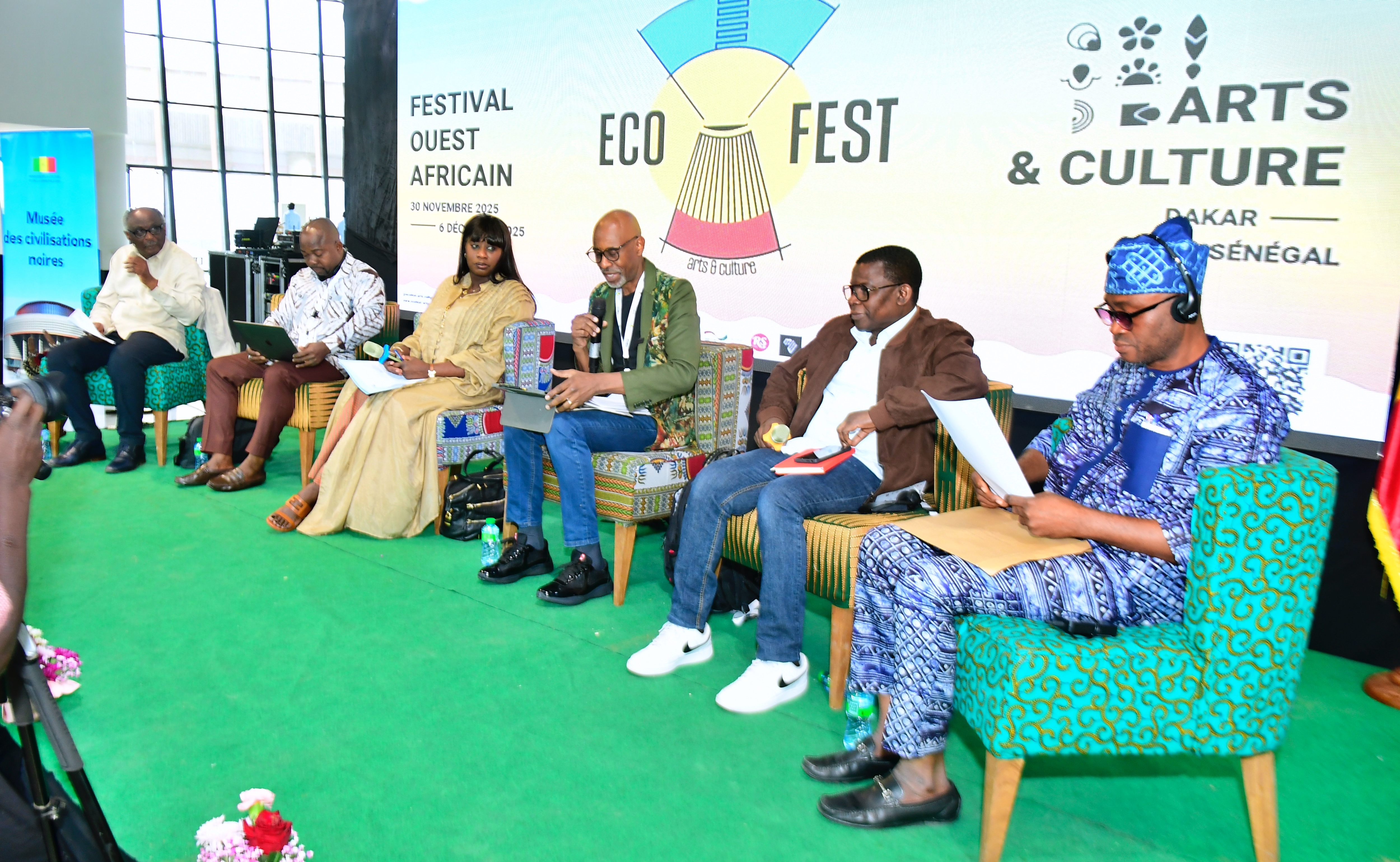
West Africa is facing challenges of unprecedented complexity. According to Professor Yacouba Konaté, nations are undermined by deep internal fractures, often inherited from a poorly resolved feudal past. These tensions are exacerbated by a new type of conflict: asymmetric wars that destabilize states and terrorize populations.
In addition to this political instability, there is a major environmental crisis. Climate change is no longer a distant threat; it is resulting in increased pressure on access to essential resources like water and arable land, thus becoming a direct source of conflict between communities.
Citizenship: More than just a passport
To address this multidimensional crisis, Yacouba Konaté proposes an intellectual shift: it is urgent to rethink the very notion of citizenship. It should no longer be conceived solely as the legal bond between an individual and a nation-state.
In a region where identities are plural and borders are sometimes artificial, citizenship must embrace this complexity. It must become a social glue capable of transcending ethnic or regional affiliations to forge a common destiny. This new regional citizenship is the cornerstone of lasting peace.
Added to this are levers such as education and youth, which, according to several stakeholders, represent the bets for the future.
How can this new vision be established? The answer, for Professor Konaté, lies in education. It is the primary vehicle for promoting a robust republican and civic culture capable of resisting the siren calls of identity-based withdrawal.
Far from being a problem, Africa's youth, who make up the majority of the continent's population, represent immense potential. Professor Konaté insists on the need to view these young people not as a burden, but as the primary drivers of development and innovation. Investing in their training and giving them the means to act is the key to transforming challenges into opportunities; hence the famous concept of the demographic dividend.
Women: Pillars of societal change
In this quest for a better future, another actor is fundamental: women. Professor Konaté highlights their indispensable role in societal change.
Often on the front lines of managing the consequences of crises, they are also agents of resilience, mediation, and reconstruction.
Their full participation in political, economic, and social life is not an option, but a prerequisite for building fairer and more stable societies.
Despite the obstacles, optimism remains, because it is by relying on the energy of its youth and the strength of its women that Africa will truly be able to improve the living environment of its populations.
Opening the proceedings of this panel, the Minister of Culture, Crafts, and Tourism of Senegal, Mr. Amadou Ba, stated that the ECOWAS of the peoples must be decisive in the face of the region's challenges.
On this point, he emphasized the proper application of texts regarding the free movement of people and goods. To achieve this, he called for leveraging cultural factors to establish lasting peace in a region plagued by cyclical crises.
Mr. Ba believes that beyond the economic aspect, integration must be a spearhead in the integration process. The Senegalese Minister of Culture thus calls for the coordination and labeling of West African cultural resources to better capitalize on the creative cultural industries.