African cultural industries: a regional market in transition
3/12/25
Gathered under the theme "Cultural and Creative Industries: Regional Market and the Circulation of Artists and Works," major players in cinema, festivals, digital media, and the visual arts from West Africa engaged in a strategic debate on the future of African creativity. Three high-level panels, led by experts from Burkina Faso, Senegal, Mali, Nigeria, Côte d’Ivoire, The Gambia, and Benin, highlighted urgent challenges, emerging economic models, and opportunities for cultural integration within the regional community.
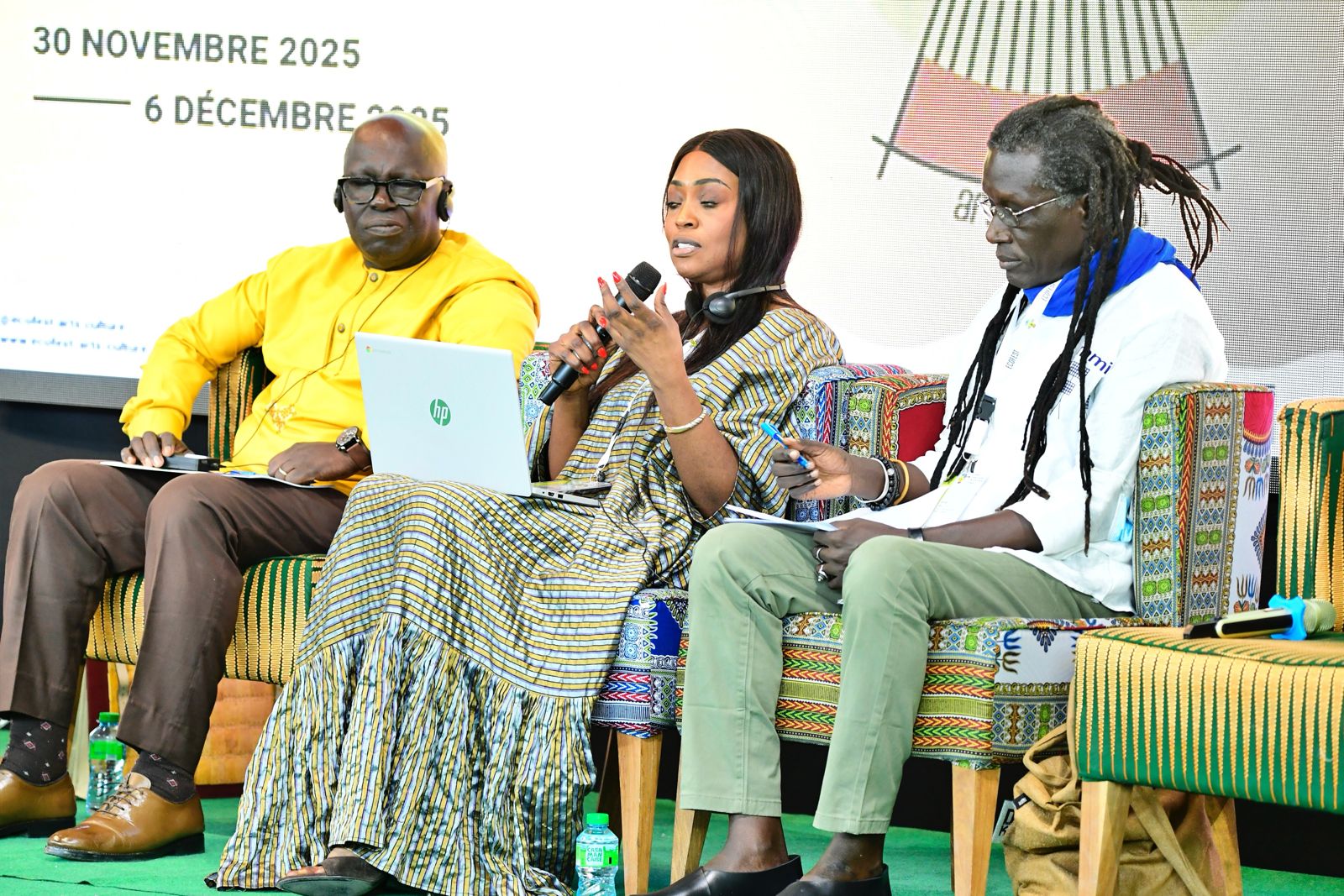
A regional cultural market must be structured to unleash African creative energy. The first panel, dedicated to the circulation of artists and works, brought together influential figures from the sector: moderator Luc Maytoukou, Aboubacar Ouango of FESPACO, Abdramane Kamaté of MASA, Marème Ba of the Dakar Biennale, Maïga from the Festival sur le Niger, and Wasiu Olawale Bello of the Osun Osogbo Festival. All emphasized the need to harmonize regional cultural policies to facilitate the mobility of creators and the distribution of works.
They insisted on the persistent obstacles—administrative delays, transport costs, and the lack of robust regional platforms—while recalling the immense economic potential of better-organized cultural free movement. The sub-region's flagship festivals demonstrate the continent's artistic vitality, but their impact remains limited by barriers between countries that are still too high.
New digital models: a cultural revolution in progress
The second panel, moderated by Oumar Sall of Cinekap (Senegal), focused on digital cultural industries. Joining him were Youma Fall, an expert in cultural development; Thierry Millogo of Mercury Burkina; Oluseyi Asurf Amuwa of Nollywood (Nigeria); William Kodjo of the Beninese Agency for the Development of Cultural Industries; and Seck Dieng of the Urban Cultures Fund (Senegal), who analyzed the evolution of creation, production, and distribution platforms.
The speakers demonstrated how streaming, social media, virtual studios, and new funding methods are disrupting traditional models. Nollywood, now the continent's leading film industry, serves as a benchmark for rapid production, mass distribution, and innovative economic strategies. The panelists also stressed that the transition to digital must be accompanied by increased public support, youth training, and a legal framework adapted to protect artists and monetize their work.
The social status of artists: a challenge of recognition and protection
The third panel, led by author and critic Mariam Touré with Oumar Sall moderating, opened an in-depth discussion on the social standing of the African artist. Olimata Taal of the African Artists and Performers International (AAPI Gambia), Hugues Diaz, Director of Arts for Senegal, and other experts highlighted the need to better regulate the professional status of artists.
They reiterated that artistic creation is not just a vocation, but a profession that requires support, social protection, regular funding, and institutions capable of ensuring the professional stability of creators. Recognizing the social role of artists is an essential condition for ensuring the continuity and quality of African cultural production.
A shared ambition: making the African cultural market a truly integrated space
The panels converged on the same conclusion: Africa possesses exceptional artistic heritage, a young and dynamic audience, an immense market, and creativity recognized worldwide. But without solid regional structuring and consistent institutional support, this potential will remain underutilized. The will is there, and practices are evolving, but true cultural integration remains to be built.
Keys to propelling African culture onto the global stage
The future of African cultural industries rests on several essential pillars: strengthening the mobility of artists within the region, further professionalizing cultural sectors, supporting digital innovation, facilitating access to funding, harmonizing legal frameworks, modernizing infrastructure, and creating bridges between creators and international markets.
Experts believe that with better-structured cooperation between states, festivals, digital platforms, and private actors, Africa can become a major cultural hub, capable of exporting its works, promoting its talent, and establishing itself as a global creative powerhouse.