Restitution and protection of cultural property: Felwine Sarr calls for "reimagining the African museum"
4/12/25
The Museum of Black Civilizations (MCN) in Dakar hosted several cultural figures and specialists this Thursday, December 4, including Senegalese economist and thinker Felwine Sarr. At the heart of the discussions was a panel dedicated to the "Restitution and protection of cultural property," organized as part of the Professional Meetings of the first edition of the West African Festival of Arts and Culture (ECOFEST 2025).
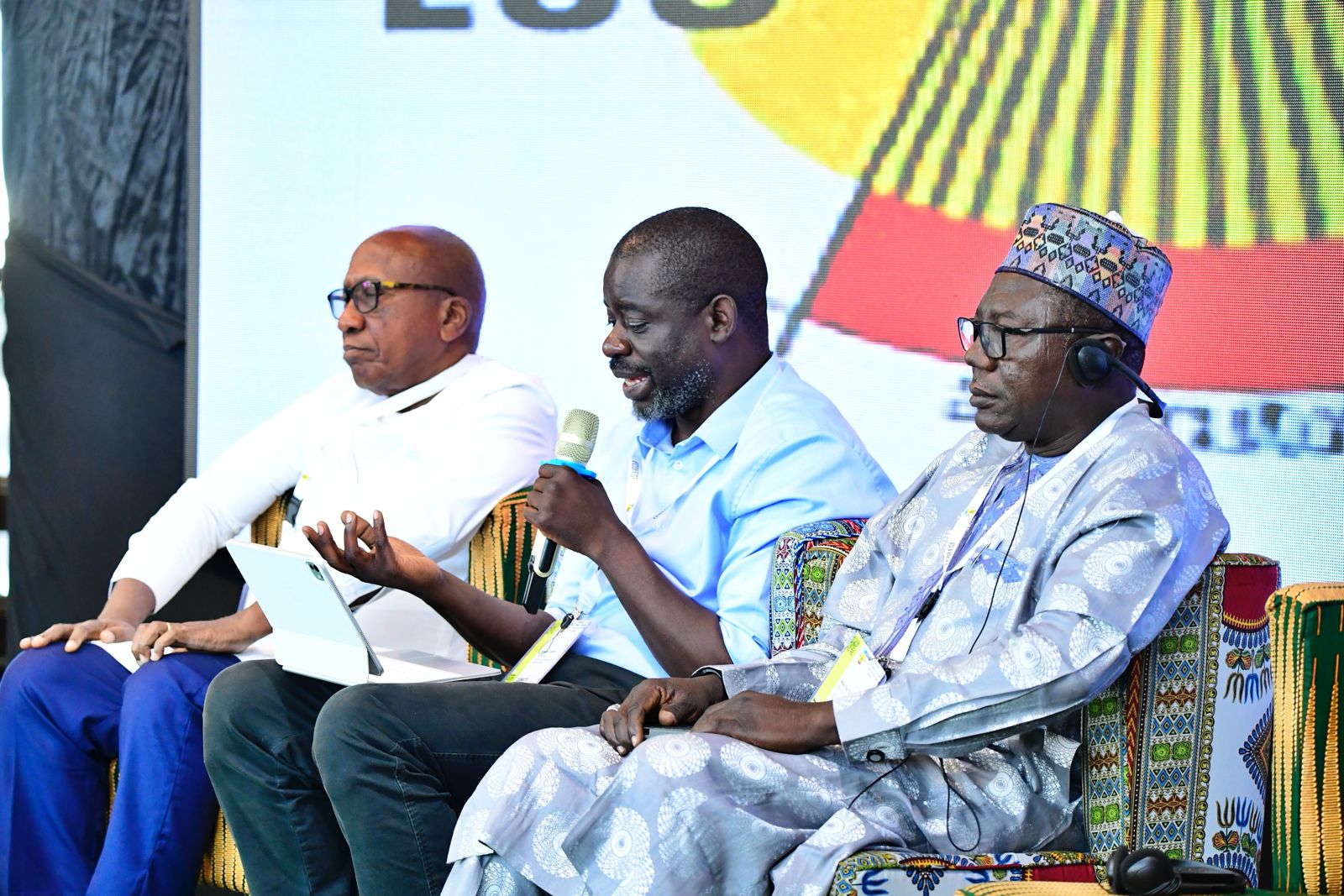
Before a packed audience, the author of Afrotopia called for a profound re-examination of the museum, its history, and its functions, in order to support the return of African works scattered throughout Western museums.
From the outset, Felwine Sarr pointed out that restitution cannot be approached as a simple "transfer of objects from one place to another." This return, he said, "opens up a more real issue: that of the resocialization of objects, the meaning we give them, the space where we place them, and what that implies for the social body."
For him, "understanding contemporary issues requires going back to the origin of the Western museum, born in the 19th century as a place for asserting identity, tasked with preserving the 'inalienable' assets of nations in the making."
However, with colonization, this model was corrupted. He asserts that "European expansion was accompanied by a vast expropriation of the cultural property of colonized peoples."
Ethnographic museums then became, according to Mr. Sarr, "museums of the other," housing objects that were discussed in the very absence of those who had created them. This displacement was compounded by a process of "re-signification": ritual objects ended up transformed into ethnographic pieces or works of art, losing part of their field of meaning in the process.
"We alter them, we reduce the scope of these objects," he lamented, posing a central question: "Has the object become something else? Can we bring back an ancient meaning, or must we construct a new one?"
The decolonization of the museum, he insisted, "requires the pluralization of voices." He cited North American experiences where First Nations co-curate their exhibitions. But beyond Western museums, the major challenge, according to the Senegalese economist, "lies in Africa itself: rethinking museum institutions, their ecologies, and their display mechanisms. The museum imported from the colonial model is not a neutral framework."
"We must reimagine our own regimes of heritage and the places themselves," he argued.
This involves drawing on pre-colonial traditions of royal, ritual, and contextual exhibitions to invent forms adapted to contemporary African societies.
Felwine Sarr also addressed the notion of the universal, often invoked by major museums like the Louvre to legitimize the holding of works from elsewhere. The universal, he said, is "performed," proclaimed by those who make themselves its guardians. Conversely, restituting and diversifying the places where cultures are expressed would allow for the building of a "pluriversalism," a universal rooted in the plurality of centers of enunciation.
"Objects in Dakar or Cotonou are just as universal as those in Paris," he affirmed.
In conclusion, he praised the Museum of Black Civilizations as a "non-subaltern museum," one that is alive and open to metamorphosis and creation. A model conducive, in his view, "to inventing institutions capable of restoring meaning to returned objects and, more broadly, of renewing the narrative that African societies produce about themselves."